Introduction
In manufacturing and mechanical engineering, maintaining uniformity in production is crucial for ensuring consistent quality and reliability of components. The DIN 2768 standard plays a vital role in achieving this uniformity. It sets out general tolerances for linear and geometrical dimensions of machined parts where no specific tolerance is provided. This article explores how implementing DIN 2768 promotes uniformity in production and the benefits it brings to manufacturers.
Overview of DIN 2768
DIN 2768 is a German standard that specifies tolerances for metal parts machined by cutting. It is divided into two classes:
- DIN 2768-f (fine): For applications requiring high precision.
- DIN 2768-m (medium): For general applications where medium precision is sufficient.
These classifications help manufacturers determine the appropriate level of precision based on the part's application, allowing for flexibility while maintaining strict quality controls.
Promoting Uniformity in Production
- Standardized Tolerances: DIN 2768 provides a clear framework for acceptable dimensional and geometrical variations, ensuring that all parts meet a uniform standard. This consistency is crucial for parts intended to fit into larger assemblies or for products with interchangeable components.
- Reduced Variation in Components: By defining specific tolerance ranges, DIN 2768 minimizes the variation in component sizes produced in different runs or by different operators or machines. This uniformity is essential for maintaining the functional integrity of mechanical systems, especially those with multiple interacting parts.
- Simplified Design and Production Processes: Engineers and designers can specify tolerances according to DIN 2768 without detailing every dimension on a component. For production, the standard reduces the complexity of quality assurance, as checking parts against standardized tolerances streamlines inspection and quality control measures.
Benefits of Uniformity in Production
- Enhanced Product Quality: Uniform components perform predictably and reliably, enhancing the overall quality of the final product. This reliability is crucial in sectors like automotive, aerospace, and medical devices, where component failure can have severe consequences.
- Increased Efficiency: Uniformity allows for smoother production flows, as fewer adjustments are needed when machines produce parts within known and accepted tolerance ranges. This efficiency can lead to cost savings and faster production times.
- Improved Customer Satisfaction: Consistent quality and performance lead to increased customer satisfaction. Uniform products are less likely to cause issues during use or assembly, resulting in fewer complaints and returns.
- Scalability and Expansion: Standardized production makes scaling up manufacturing operations easier. When expanding production lines or setting up new locations, having established standards like DIN 2768 ensures consistent quality regardless of where the parts are manufactured.
Challenges and Considerations
While the benefits of implementing DIN 2768 are significant, there are challenges to consider:
- Initial Setup and Training: Adapting production processes to comply with DIN 2768 may require initial investments in training and upgrading equipment to achieve the necessary precision.
- Balancing Cost and Precision: Especially for DIN 2768-f, achieving fine tolerances can increase production costs. Manufacturers need to balance the need for precision with cost-effectiveness, particularly when producing high volumes.
Conclusion
The uniformity in production achieved by implementing DIN 2768 offers numerous benefits for manufacturers across various industries. This standard ensures that components are produced to consistent specifications, leading to higher quality products and more efficient manufacturing processes. As the demand for precision and reliability in mechanical components grows, the importance of standards like DIN 2768 in achieving these goals continues to be underscored. By embracing these standards, manufacturers can enhance their competitive edge and meet the evolving expectations of their customers.
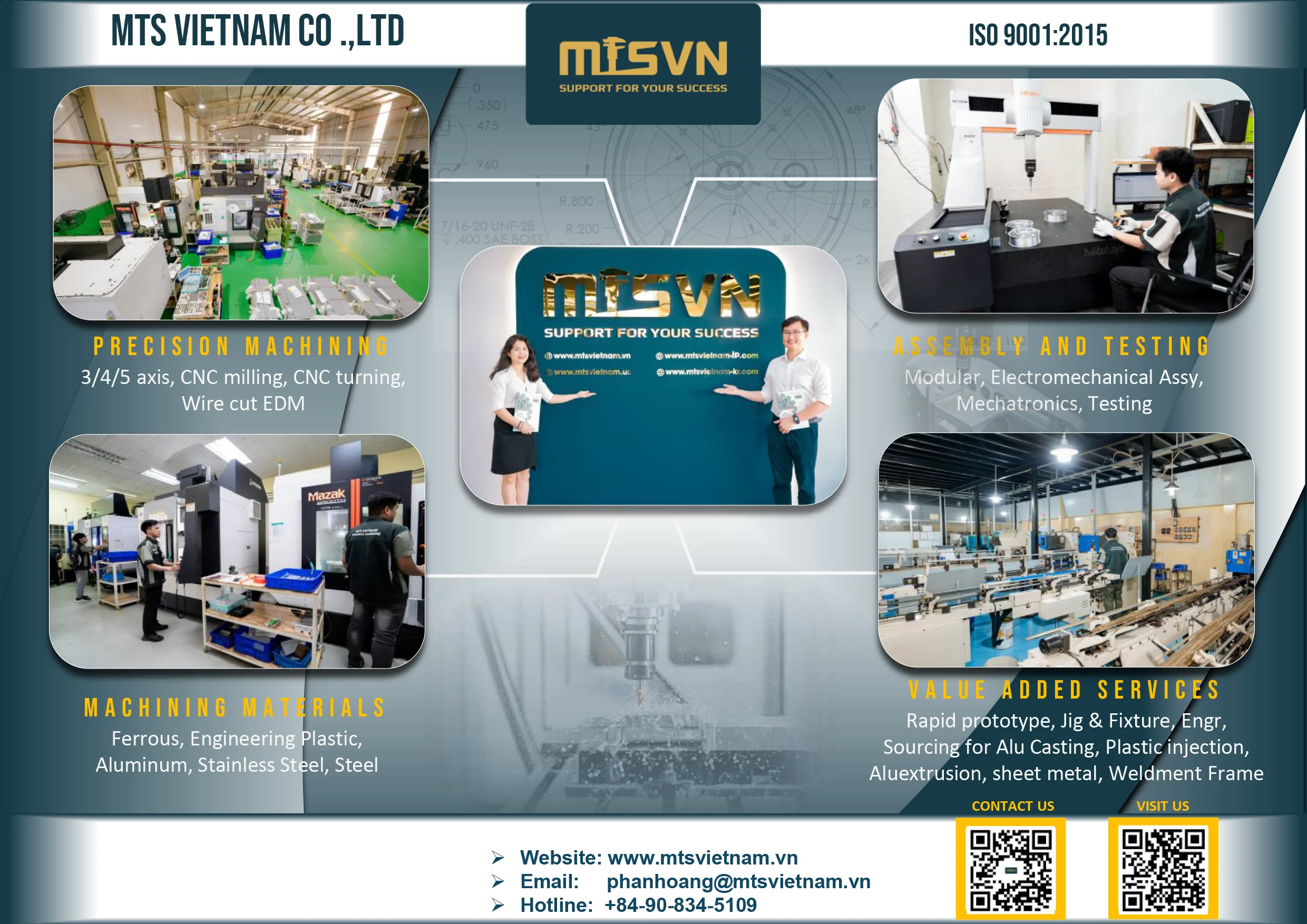
MTS Vietnam is a prominent company specializing in precision mechanical components fabrication. Established in 2017, it has quickly become a reputable name in the Vietnamese and Southeast Asian markets. The company's expertise lies in CNC milling and turning parts made from a variety of materials, including Aluminum, Steel, Stainless, POM, and other engineering plastics. MTS Vietnam is dedicated to supporting the success of its customers and strives to be a leading company in the field of precision mechanical processing both in Vietnam and internationally.
In addition to its fabrication services, MTS Vietnam offers assembly services for components and machines, as well as CNC program services. This comprehensive range of services is aimed at providing optimal solutions and benefits to its customers through the company's ecosystem and strengths. MTS Vietnam emphasizes the importance of investing in new technology and quality control equipment to ensure that it can deliver merchandise at competitive prices and within the required deadlines.
WORKSHOP: 248/10 ĐT743A Street, Binh Thung 1 Quarter, Dong Hoa Ward, Ho Chi Minh City, Vietnam
Tel/zalo/viber: 0908.345.109
Email: phanhoang@mtsvietnam.vn | info@mtsvietnam.vn
Website: www.mtsvietnam.vn (Global Market) | www.mtsvietnam-jp.com (日本)
For USA Sales, please contact MTS USA at:
Tel/zalo/viber: 978-777-1716
Email: sales@mts-usasales.com
Website: www.mtsvietnam.us (US Market)