Introduction
Precision mechanics is fundamental to the medical device industry, where accuracy, reliability, and quality are paramount. CNC (Computer Numerical Control) machining is a cornerstone technology in this field, enabling the production of intricate and precise components essential for various medical applications. This article explores how CNC machining is utilized in the medical device industry and the benefits it brings to precision mechanics.
Understanding CNC Machining in Medical Devices
CNC machining involves the use of computer-controlled tools to produce parts with high precision and accuracy. This technology is capable of creating complex geometries and tight tolerances, making it ideal for the demanding requirements of medical devices. CNC machines can work with a wide range of materials, including metals, plastics, and advanced composites, offering versatility in medical device manufacturing.
Key Advantages of CNC Machining in Medical Devices
- High Precision and Accuracy
- Consistency and Repeatability
- Complex Geometries
- Efficiency and Speed
- Material Versatility
Focus: CNC Machining Applications in Medical Devices
Critical Medical Components Produced by CNC Machining
- Surgical Instruments: Precision is crucial for surgical instruments such as scalpels, forceps, and clamps. CNC machining ensures these tools have sharp edges, precise dimensions, and high durability, which are essential for successful surgical outcomes.
- Orthopedic Implants: CNC machining is used to produce orthopedic implants, including hip and knee replacements, spinal implants, and bone plates. These implants must match the patient's anatomy perfectly, requiring the high precision that CNC machining provides.
- Dental Implants and Tools: The dental industry relies on CNC machining for producing implants, crowns, bridges, and various dental tools. The ability to create custom-fitted parts ensures patient comfort and effectiveness of dental treatments.
- Diagnostic Equipment Components: CNC machining is used to manufacture parts for diagnostic equipment such as MRI machines, CT scanners, and ultrasound devices. These components require precise manufacturing to ensure accurate diagnostic results.
- Prosthetics: CNC machining allows for the production of customized prosthetic limbs and components, ensuring a perfect fit and functionality for individual patients. The technology enables the creation of lightweight, durable, and highly functional prosthetics.
Benefits of CNC Machining for Medical Devices
- Enhanced Precision: The high precision of CNC machining ensures that medical devices meet the strict dimensional and performance requirements necessary for safe and effective use.
- Consistency and Reliability: CNC machining provides consistent quality across production batches, ensuring that each device performs reliably. This consistency is crucial for maintaining patient safety and trust.
- Customization: CNC machining enables the production of customized medical devices tailored to individual patient needs. This capability is particularly important for implants and prosthetics, where personalized fit and comfort are essential.
- Material Compatibility: CNC machines can work with biocompatible materials, ensuring that medical devices are safe for use within the human body. This compatibility is vital for implants and surgical instruments.
- Regulatory Compliance: CNC machining helps manufacturers meet stringent regulatory standards set by agencies like the FDA and ISO. The precision and repeatability of CNC processes ensure that devices comply with these rigorous requirements.
Challenges in Medical Device CNC Machining
- Stringent Quality Control: Medical devices must meet high standards of quality and safety. Implementing robust quality control processes and thorough testing is essential to ensure compliance with regulatory standards.
- Complex Designs: The intricate designs of many medical devices require advanced CNC programming and skilled operators. Investing in state-of-the-art software and training is necessary to achieve the required precision.
- Cost Considerations: High-precision CNC machining can be costly. However, the benefits of producing reliable, high-quality medical devices often outweigh the initial investment.
Future Trends in Medical Device CNC Machining
- Advanced Materials: The development of new biocompatible materials will expand the capabilities of CNC machining in producing innovative medical devices.
- Miniaturization: As medical devices become smaller and more complex, CNC machining will play a critical role in manufacturing these miniaturized components with high precision.
- Integration with Additive Manufacturing: Combining CNC machining with additive manufacturing (3D printing) offers new possibilities for creating complex, customized medical devices.
- Automation and AI: The integration of automation and artificial intelligence with CNC machining will enhance production efficiency and precision, further improving the quality of medical devices.
Conclusion
CNC machining is essential in the medical device industry, enabling the production of highly precise, reliable, and customized components. From surgical instruments to diagnostic equipment and prosthetics, CNC-machined parts play a crucial role in advancing medical technology and improving patient outcomes. As the medical device industry continues to evolve, CNC machining will remain a vital technology, driving innovation and ensuring the highest standards of quality and safety. Embracing these advancements will help manufacturers meet the growing demands and challenges of the healthcare sector.
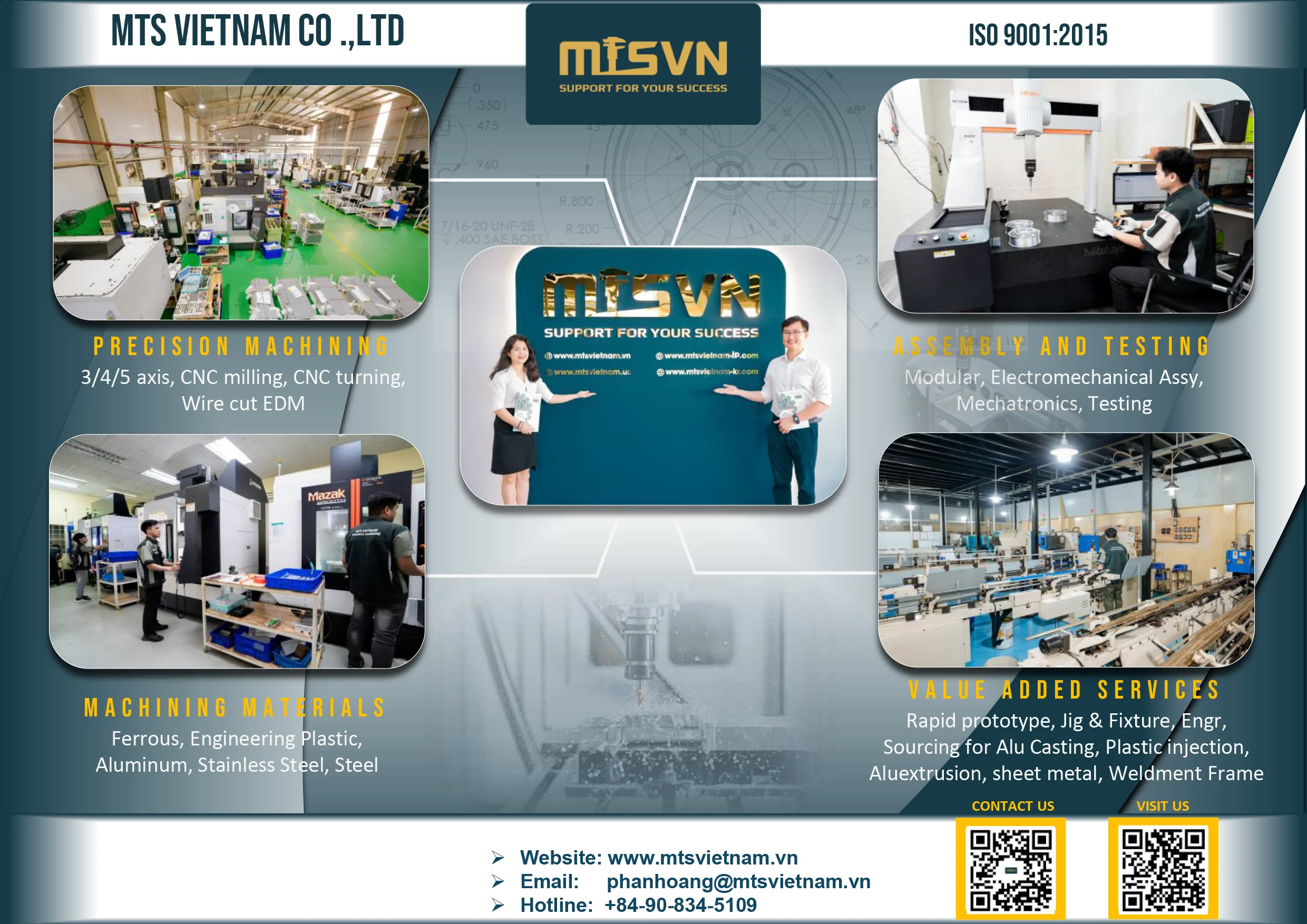
MTS Vietnam is a prominent company specializing in precision mechanical components fabrication. Established in 2017, it has quickly become a reputable name in the Vietnamese and Southeast Asian markets. The company's expertise lies in CNC milling and turning parts made from a variety of materials, including Aluminum, Steel, Stainless, POM, and other engineering plastics. MTS Vietnam is dedicated to supporting the success of its customers and strives to be a leading company in the field of precision mechanical processing both in Vietnam and internationally.
In addition to its fabrication services, MTS Vietnam offers assembly services for components and machines, as well as CNC program services. This comprehensive range of services is aimed at providing optimal solutions and benefits to its customers through the company's ecosystem and strengths. MTS Vietnam emphasizes the importance of investing in new technology and quality control equipment to ensure that it can deliver merchandise at competitive prices and within the required deadlines.
WORKSHOP: 248/10 ĐT743A Street, Binh Thung 1 Quarter, Dong Hoa Ward, Ho Chi Minh City, Vietnam
Tel/zalo/viber: 0908.345.109
Email: phanhoang@mtsvietnam.vn | info@mtsvietnam.vn
Website: www.mtsvietnam.vn (Global Market) | www.mtsvietnam-jp.com (日本)
For USA Sales, please contact MTS USA at:
Tel/zalo/viber: 978-777-1716
Email: sales@mts-usasales.com
Website: www.mtsvietnam.us (US Market)