Introduction
Enterprise Resource Planning (ERP) systems play a pivotal role in the precision mechanics sector by integrating various business processes into a single, cohesive system. This integration is crucial for managing the complexities of manufacturing high-precision parts and assemblies. ERP systems help streamline operations, improve financial compliance, and enhance productivity by providing a unified view of business processes. This article explores the significance of ERP integration as a key component of program services in precision mechanics.
Role of ERP Systems in Precision Mechanics
ERP systems are designed to consolidate all business operations into a unified platform, including inventory management, order processing, finance, human resources, and customer relations. In the field of precision mechanics, where precision and efficiency are paramount, ERP integration helps companies manage their operations more effectively and respond more quickly to market changes.
Core Functionalities of ERP Systems
- Inventory Management: ERP systems provide detailed tracking of materials from receipt to usage. This is crucial in precision mechanics where the quality and availability of specific materials directly impact production quality and timelines.
- Production Planning and Scheduling: ERP helps streamline production processes by scheduling equipment and labor based on workflow capacities. This ensures that manufacturing operations are optimized for efficiency and can adapt to new orders or changes in production.
- Quality Control: Integrating quality control with other business processes ensures that standards are maintained throughout the production cycle. ERP systems can monitor quality across different stages of manufacturing and trigger interventions when needed.
- Financial Management: ERP systems offer comprehensive tools for managing all financial aspects of a business, including accounting, budgeting, and asset management. In precision mechanics, where projects can be capital-intensive, maintaining financial control is essential.
- Customer Relationship Management (CRM): By integrating CRM functionalities, ERP systems help businesses manage customer interactions, from order intake through post-sale services, enhancing customer satisfaction and retention.
Benefits of ERP Integration in Precision Mechanics
- Enhanced Operational Efficiency: ERP systems automate routine tasks and centralize data, reducing manual labor and minimizing errors. This increases overall operational efficiency, allowing companies to focus on innovation and quality improvement.
- Improved Decision Making: With real-time data on production, finance, and customer interactions, decision-makers can obtain a holistic view of business operations. This integration provides the insights needed to make informed strategic decisions.
- Scalability: ERP systems are scalable, making it easier for businesses to expand operations or adapt to changing market demands without compromising on efficiency or performance.
- Cost Reduction: By optimizing production planning and reducing waste through improved inventory management, ERP systems can significantly lower operational costs.
- Regulatory Compliance: ERP systems help ensure compliance with industry standards and government regulations by maintaining accurate records and facilitating reporting procedures.
Challenges and Considerations
Implementing an ERP system in precision mechanics can be challenging due to the complexity of the processes involved and the specificity of the operations. It requires significant investment and a strategic implementation plan. Moreover, training employees to effectively use the ERP system is crucial for maximizing its benefits.
Future Outlook
The future of ERP systems in precision mechanics looks towards greater integration with advanced technologies such as IoT, AI, and machine learning. These integrations promise to further enhance the automation of processes, improve predictive analytics for maintenance and inventory management, and refine decision-making processes.
Conclusion
ERP integration is a critical component of program services in precision mechanics, offering substantial benefits in operational efficiency and strategic management. As companies continue to face increasing competition and complex manufacturing requirements, ERP systems will play an increasingly vital role in maintaining competitive edges by ensuring operations are efficient, integrated, and responsive to market needs.
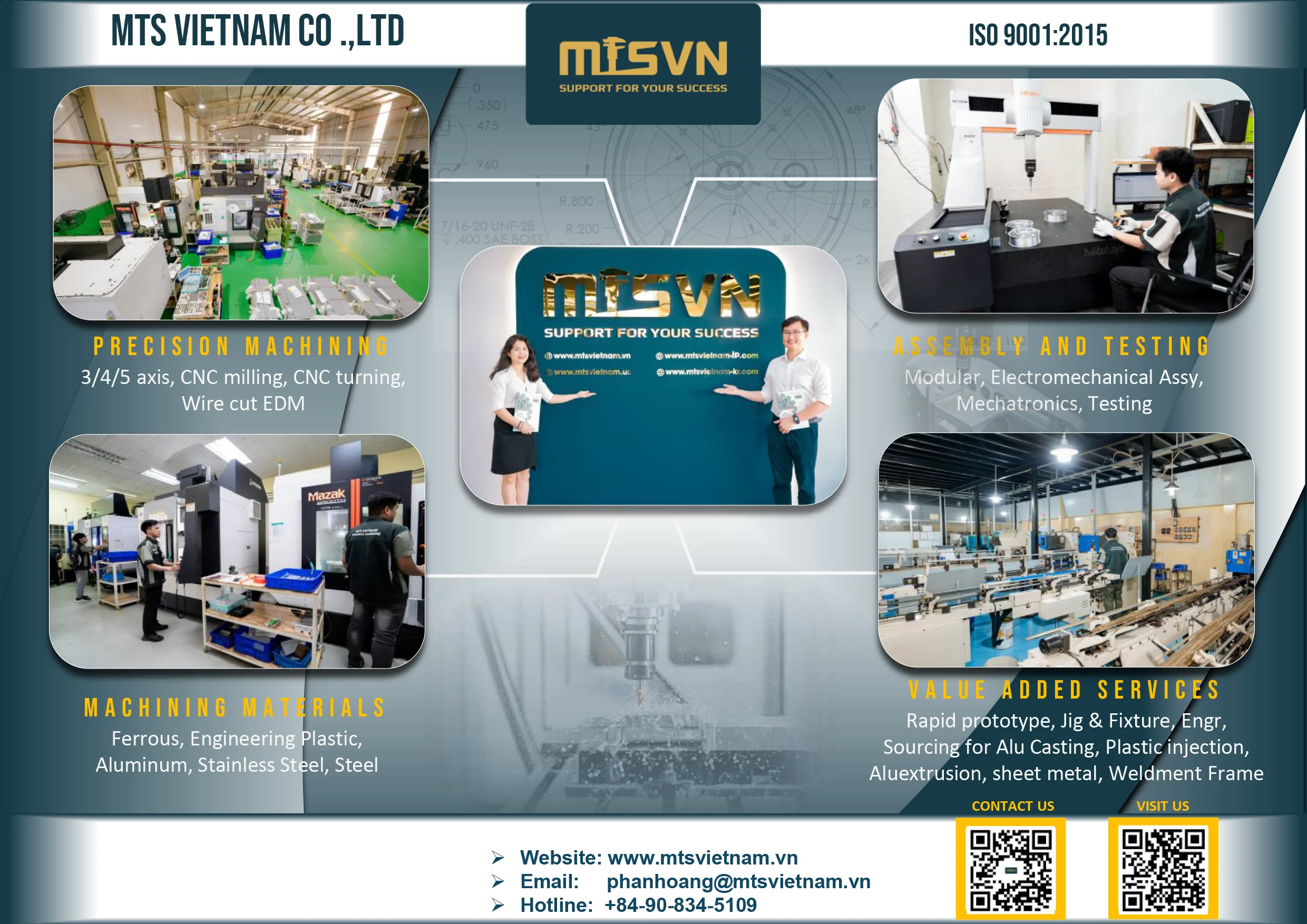
MTS Vietnam is a prominent company specializing in precision mechanical components fabrication. Established in 2017, it has quickly become a reputable name in the Vietnamese and Southeast Asian markets. The company's expertise lies in CNC milling and turning parts made from a variety of materials, including Aluminum, Steel, Stainless, POM, and other engineering plastics. MTS Vietnam is dedicated to supporting the success of its customers and strives to be a leading company in the field of precision mechanical processing both in Vietnam and internationally.
In addition to its fabrication services, MTS Vietnam offers assembly services for components and machines, as well as CNC program services. This comprehensive range of services is aimed at providing optimal solutions and benefits to its customers through the company's ecosystem and strengths. MTS Vietnam emphasizes the importance of investing in new technology and quality control equipment to ensure that it can deliver merchandise at competitive prices and within the required deadlines.
WORKSHOP: 248/10 ĐT743A Street, Binh Thung 1 Quarter, Dong Hoa Ward, Ho Chi Minh City, Vietnam
Tel/zalo/viber: 0908.345.109
Email: phanhoang@mtsvietnam.vn | info@mtsvietnam.vn
Website: www.mtsvietnam.vn (Global Market) | www.mtsvietnam-jp.com (日本)
For USA Sales, please contact MTS USA at:
Tel/zalo/viber: 978-777-1716
Email: sales@mts-usasales.com
Website: www.mtsvietnam.us (US Market)