Introduction
ISO 9001:2015 is widely recognized as a cornerstone of quality management systems (QMS) across various industries, providing a structured framework to ensure products meet the highest standards of quality. In the mechanical industry, where precision, reliability, and durability are crucial, adhering to ISO 9001:2015 can significantly enhance product quality. This article explores how ISO 9001:2015 fosters superior product quality in the mechanical sector, highlighting the processes and principles that contribute to this vital outcome.
ISO 9001:2015 and Product Quality
ISO 9001:2015 does not merely focus on meeting customer requirements but emphasizes the importance of exceeding them through continual improvement and risk management. For the mechanical industry, which often deals with complex assemblies and precision engineering, the standard provides a framework that promotes excellence at every stage of manufacturing.
Key Features of ISO 9001:2015 That Enhance Product Quality
- Customer-Centric Approach: At its core, ISO 9001:2015 requires companies to thoroughly understand customer needs and expectations. This approach ensures that the mechanical products developed are not only in line with customer specifications but are designed to enhance customer satisfaction.
- Systematic Process Management: ISO 9001:2015 promotes the adoption of a process approach which involves planning, managing, and reviewing core business processes with the aim of improving their efficiency and effectiveness. In the mechanical industry, this means ensuring that every component of a product is produced with precision and consistency.
- Preventive Action and Risk Management: The standard encourages companies to adopt proactive measures to mitigate potential risks. By identifying and addressing risks before they become issues, companies can prevent defects, reduce waste, and avoid costly rework.
- Continual Improvement: ISO 9001:2015 mandates continual improvement of the quality management system. In the mechanical industry, this translates to ongoing efforts to enhance machinery, processes, and techniques, which in turn leads to higher quality products.
- Documented Information: The standard emphasizes the importance of documentation and records as a means of achieving consistency and traceability. For mechanical manufacturing, maintaining detailed records ensures that processes are repeatable and that deviations from quality standards can be quickly identified and addressed.
Benefits of Enhanced Product Quality in the Mechanical Industry
- Increased Customer Trust: High-quality, reliable products strengthen customer confidence and foster long-term business relationships.
- Competitive Advantage: Superior product quality can differentiate a company from its competitors, opening up new markets and attracting more clients.
- Reduced Costs: By minimizing errors and defects, ISO 9001:2015 helps reduce wastage and the cost of rework or recalls, thus optimizing production costs.
- Regulatory Compliance: Adherence to ISO 9001:2015 often means that products meet or exceed regulatory requirements, reducing legal risks associated with non-compliance.
- Enhanced Reputation: Consistently producing high-quality products elevates a company’s reputation within the industry, leading to increased opportunities and partnerships.
Challenges and Strategies for Implementation
Implementing ISO 9001:2015 in the mechanical industry involves certain challenges, including the initial setup cost, training employees to adapt to new processes, and ongoing maintenance of the QMS. Overcoming these challenges typically requires:
- Strong Leadership Commitment: Effective implementation starts with buy-in from the top management, who must lead by example and allocate adequate resources.
- Employee Training and Engagement: Ensuring that all employees understand the benefits of ISO 9001:2015 and are fully trained in its requirements and processes.
- Continuous Monitoring and Feedback: Setting up systems for regular audits, feedback, and process adjustments to maintain compliance and drive improvements.
Conclusion
ISO 9001:2015 significantly enhances product quality in the mechanical industry by embedding quality into every layer of the production process. Through its comprehensive, risk-based approach to quality management, it enables manufacturers to not only meet but exceed customer expectations, ensuring sustainability and growth in a competitive marketplace.
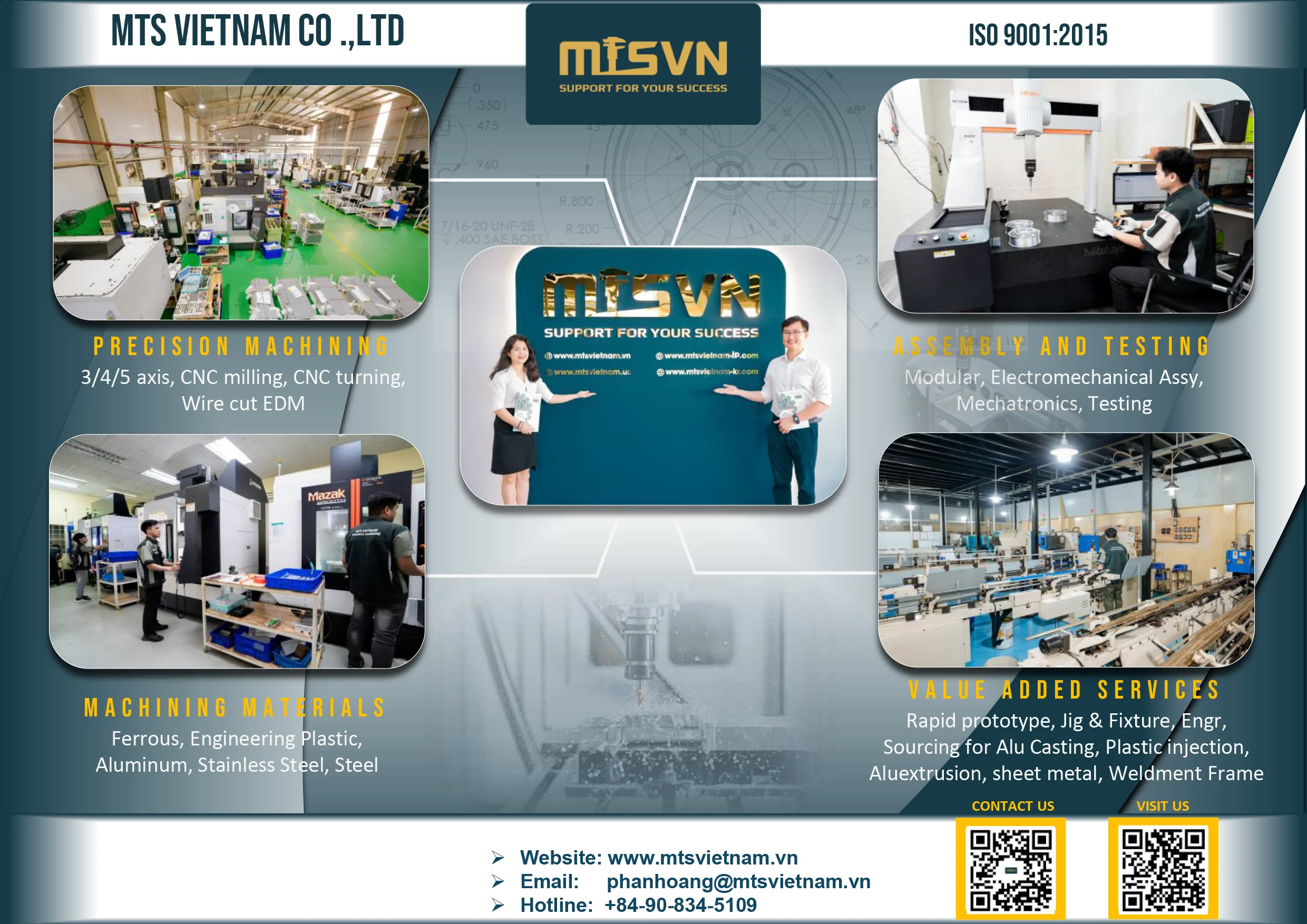
MTS Vietnam is a prominent company specializing in precision mechanical components fabrication. Established in 2017, it has quickly become a reputable name in the Vietnamese and Southeast Asian markets. The company's expertise lies in CNC milling and turning parts made from a variety of materials, including Aluminum, Steel, Stainless, POM, and other engineering plastics. MTS Vietnam is dedicated to supporting the success of its customers and strives to be a leading company in the field of precision mechanical processing both in Vietnam and internationally.
In addition to its fabrication services, MTS Vietnam offers assembly services for components and machines, as well as CNC program services. This comprehensive range of services is aimed at providing optimal solutions and benefits to its customers through the company's ecosystem and strengths. MTS Vietnam emphasizes the importance of investing in new technology and quality control equipment to ensure that it can deliver merchandise at competitive prices and within the required deadlines.
WORKSHOP: 248/10 ĐT743A Street, Binh Thung 1 Quarter, Dong Hoa Ward, Ho Chi Minh City, Vietnam
Tel/zalo/viber: 0908.345.109
Email: phanhoang@mtsvietnam.vn | info@mtsvietnam.vn
Website: www.mtsvietnam.vn (Global Market) | www.mtsvietnam-jp.com (日本)
For USA Sales, please contact MTS USA at:
Tel/zalo/viber: 978-777-1716
Email: sales@mts-usasales.com
Website: www.mtsvietnam.us (US Market)