Introduction
The electronics industry thrives on innovation, precision, and miniaturization. As devices become increasingly complex and compact, the demand for high-precision components grows. CNC (Computer Numerical Control) machining plays a pivotal role in this sector, enabling the production of intricate and accurate parts essential for modern electronic devices. This article delves into how CNC machining is utilized in the electronics industry and the benefits it brings to precision mechanics.
Understanding CNC Machining in Electronics
CNC machining involves using computer-controlled machinery to produce parts with high precision and accuracy. This technology is adept at creating complex geometries and maintaining tight tolerances, which are crucial for the diverse requirements of electronic components. CNC machines can work with various materials, including metals, plastics, and advanced composites, offering flexibility and versatility in electronics manufacturing.
Key Advantages of CNC Machining in Electronics
- High Precision and Accuracy
- Consistency and Repeatability
- Complex Geometries
- Efficiency and Speed
- Material Versatility
Focus: CNC Machining Applications in Electronics
Critical Electronic Components Produced by CNC Machining
- Printed Circuit Boards (PCBs): CNC machines can drill precise holes and cut intricate shapes in PCBs, which are the backbone of electronic devices. The precision ensures reliable connections and optimal performance.
- Enclosures and Housings: CNC machining is used to create custom enclosures and housings for electronic devices, including smartphones, laptops, and wearables. These parts must fit perfectly to protect internal components and maintain the device's aesthetic appeal.
- Connectors and Terminals: High-precision connectors and terminals are essential for ensuring secure and reliable electrical connections. CNC machining produces these components with the tight tolerances necessary for effective performance.
- Heat Sinks: CNC machining creates heat sinks with intricate fin designs that enhance thermal management in electronic devices. Proper heat dissipation is crucial for maintaining the performance and longevity of electronics.
- Microelectronics Components: The miniaturization of electronic devices requires the production of tiny, precise components. CNC machining can produce parts with the necessary detail and accuracy for microelectronics.
- Prototyping and Custom Parts: CNC machining is ideal for producing prototypes and custom parts, allowing engineers to test new designs and make modifications quickly, facilitating innovation and development.
Benefits of CNC Machining for Electronic Parts
- Enhanced Precision: The high precision of CNC machining ensures that electronic components meet strict dimensional and performance requirements necessary for reliable and efficient operation.
- Consistency and Reliability: CNC machining provides consistent quality across production batches, ensuring each part performs reliably. This consistency is crucial for maintaining the integrity and functionality of electronic devices.
- Customization: CNC machining enables the production of customized electronic components tailored to specific needs. This capability is particularly important for prototypes and specialized devices.
- Material Compatibility: CNC machines can work with materials that are compatible with electronic applications, ensuring that components are durable and function effectively within their intended environments.
- Regulatory Compliance: CNC machining helps manufacturers meet stringent regulatory standards set by agencies like the International Electrotechnical Commission (IEC). The precision and repeatability of CNC processes ensure compliance with these rigorous requirements.
Challenges in Electronics CNC Machining
- Complex Designs: The intricate designs of many electronic components require advanced CNC programming and skilled operators. Investing in state-of-the-art software and training is essential to achieve the required precision.
- Miniaturization: As electronic devices become smaller, the components also shrink in size, making the machining process more challenging. CNC machines must be capable of producing these tiny parts with high precision.
- Material Hardness: Some electronic components use hard materials like certain alloys, which can be challenging to machine. CNC machines must be equipped with the right tools and parameters to handle these materials effectively.
Future Trends in Electronics CNC Machining
- Advanced Materials: The development of new materials, such as advanced composites and high-performance plastics, will expand the capabilities of CNC machining in producing innovative electronic components.
- Increased Automation: The integration of automation and robotics with CNC machining will enhance production efficiency and precision, reducing costs and improving quality.
- Additive Manufacturing Integration: Combining CNC machining with additive manufacturing (3D printing) offers new possibilities for creating complex, customized electronic components.
- Nano-Scale Machining: As the demand for smaller electronic devices continues to grow, CNC machining techniques at the nano-scale will become increasingly important.
Conclusion
CNC machining is indispensable in the electronics industry, enabling the production of precise, reliable, and high-performance components. From PCBs and enclosures to connectors and microelectronics, CNC-machined parts ensure the quality and functionality of electronic devices. As the electronics industry continues to evolve with new technologies and materials, CNC machining will remain a critical tool in driving innovation and maintaining high standards in electronic manufacturing. Embracing these advancements will help manufacturers meet the growing demands and challenges of the electronics sector.
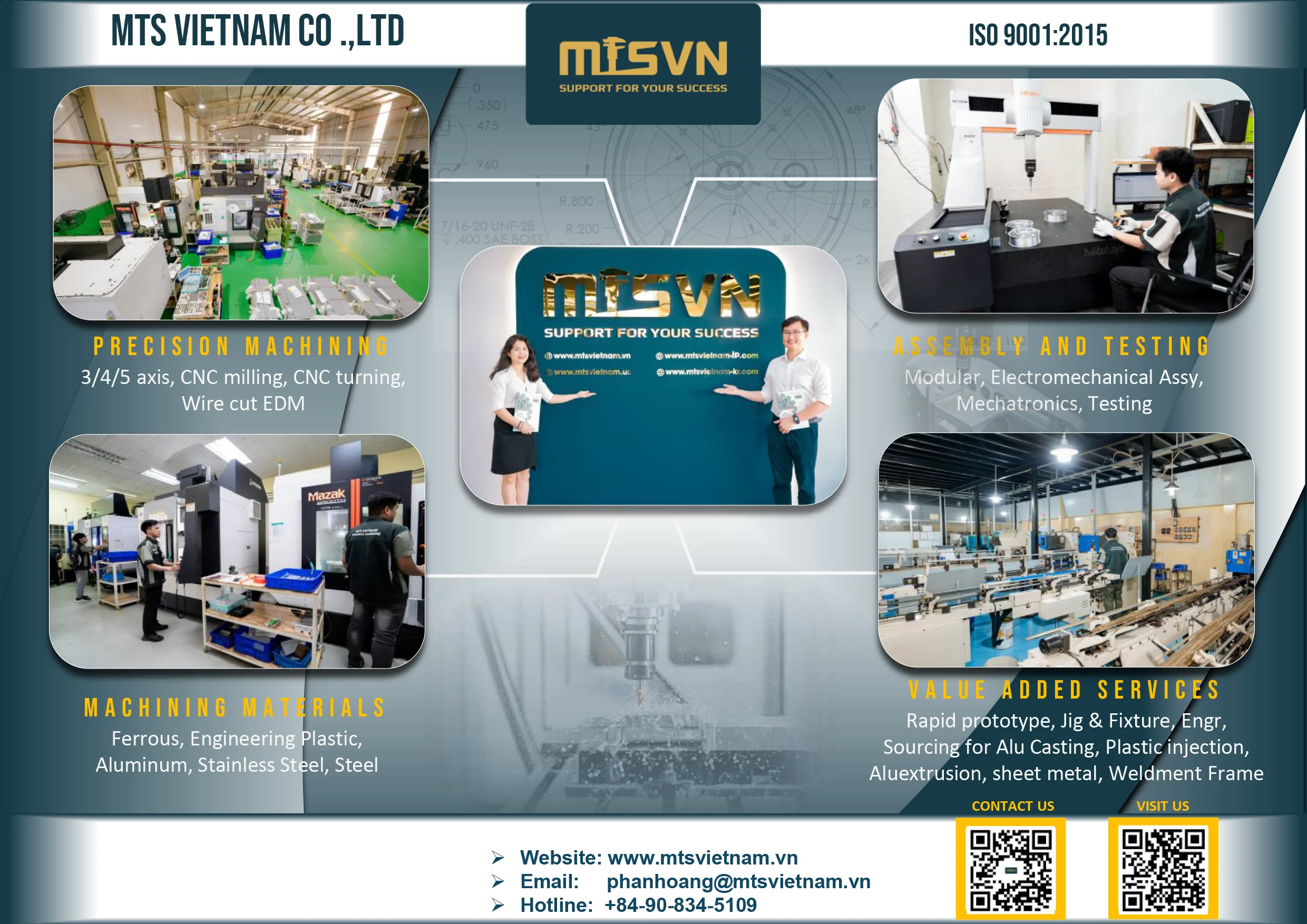
MTS Vietnam is a prominent company specializing in precision mechanical components fabrication. Established in 2017, it has quickly become a reputable name in the Vietnamese and Southeast Asian markets. The company's expertise lies in CNC milling and turning parts made from a variety of materials, including Aluminum, Steel, Stainless, POM, and other engineering plastics. MTS Vietnam is dedicated to supporting the success of its customers and strives to be a leading company in the field of precision mechanical processing both in Vietnam and internationally.
In addition to its fabrication services, MTS Vietnam offers assembly services for components and machines, as well as CNC program services. This comprehensive range of services is aimed at providing optimal solutions and benefits to its customers through the company's ecosystem and strengths. MTS Vietnam emphasizes the importance of investing in new technology and quality control equipment to ensure that it can deliver merchandise at competitive prices and within the required deadlines.
WORKSHOP: 248/10 ĐT743A Street, Binh Thung 1 Quarter, Dong Hoa Ward, Ho Chi Minh City, Vietnam
Tel/zalo/viber: 0908.345.109
Email: phanhoang@mtsvietnam.vn | info@mtsvietnam.vn
Website: www.mtsvietnam.vn (Global Market) | www.mtsvietnam-jp.com (日本)
For USA Sales, please contact MTS USA at:
Tel/zalo/viber: 978-777-1716
Email: sales@mts-usasales.com
Website: www.mtsvietnam.us (US Market)