Introduction
In the exacting field of precision mechanics, where the smallest details can significantly impact product performance and quality, continuous improvement is not just beneficial—it's imperative. ISO 9001:2015, the international standard for quality management systems (QMS), emphasizes continuous improvement as one of its core principles. This article explores the significance of this principle within the context of precision mechanics, detailing how it enhances processes, product quality, and customer satisfaction.
Understanding Continuous Improvement in ISO 9001:2015
Continuous improvement, as outlined in ISO 9001:2015, involves an ongoing effort to enhance products, services, or processes. These improvements can be incremental over time or achieved through significant breakthroughs. In precision mechanics, this means constantly striving to refine the manufacturing processes and products to meet increasingly stringent standards and customer expectations.
Key Aspects of Continuous Improvement in Precision Mechanics
- Regular Process Evaluation and Optimization: ISO 9001:2015 encourages organizations to systematically evaluate their processes using performance metrics. In precision mechanics, this can involve analyzing production data to identify inefficiencies or areas for enhancement in machining, assembly, or inspection processes.
- Feedback Loops: Implementing robust mechanisms for gathering and analyzing feedback from customers and internal stakeholders is vital. This feedback is crucial for identifying areas for improvement and ensuring that the outputs meet the intended quality standards.
- Employee Involvement: Engaging employees at all levels in the improvement process is essential. Workers on the production floor can provide unique insights into practical challenges and potential solutions, driving meaningful changes that enhance productivity and quality.
- Innovation and Technology Adoption: Continuous improvement in precision mechanics often involves adopting new technologies or innovative methods to enhance precision, reduce waste, or speed up production. Keeping abreast of technological advancements and integrating them into existing processes can significantly improve outcomes.
- Training and Development: Ongoing education and training are crucial for fostering a culture of improvement. Regular training ensures that all employees are skilled in the latest techniques and technologies, empowering them to contribute effectively to continuous improvement initiatives.
Benefits of Continuous Improvement in Precision Mechanics
- Enhanced Product Quality: Continuous improvement helps ensure that products not only meet but exceed quality standards and customer expectations, which is particularly crucial in fields such as aerospace, medical devices, and automotive manufacturing.
- Increased Efficiency: By continually refining processes, companies can reduce waste and downtime, optimize resource use, and achieve greater efficiencies, which translate into cost savings.
- Competitive Advantage: Organizations committed to continuous improvement are better positioned to adapt to changes in customer demands and market conditions, maintaining a competitive edge in the industry.
- Employee Satisfaction and Retention: Cultivating a work environment that values employee input and fosters professional growth can lead to higher job satisfaction and lower turnover rates.
- Customer Loyalty: Consistently improving product quality and customer service enhances customer satisfaction and loyalty, which are key to long-term business success.
Challenges and Implementation Strategies
Implementing a culture of continuous improvement involves several challenges, including resistance to change, the need for upfront investment in technology and training, and the difficulty of measuring improvements in highly technical environments. To overcome these challenges, organizations should:
- Set Clear Objectives and Metrics: Define specific, measurable objectives for improvement initiatives to help guide efforts and evaluate success.
- Promote Leadership Engagement: Ensure that top management actively supports and participates in continuous improvement efforts, providing necessary resources and setting a positive example.
- Foster Open Communication: Encourage a culture where employees feel comfortable voicing ideas and suggestions without fear of criticism or reprisal.
Conclusion
Continuous improvement is a key feature of ISO 9001:2015 and a cornerstone of successful operations in precision mechanics. By embedding this principle into every facet of the organization, companies can not only meet the high expectations of their customers and regulatory bodies but also drive innovation and efficiency, securing their place as leaders in the competitive landscape of precision mechanics.
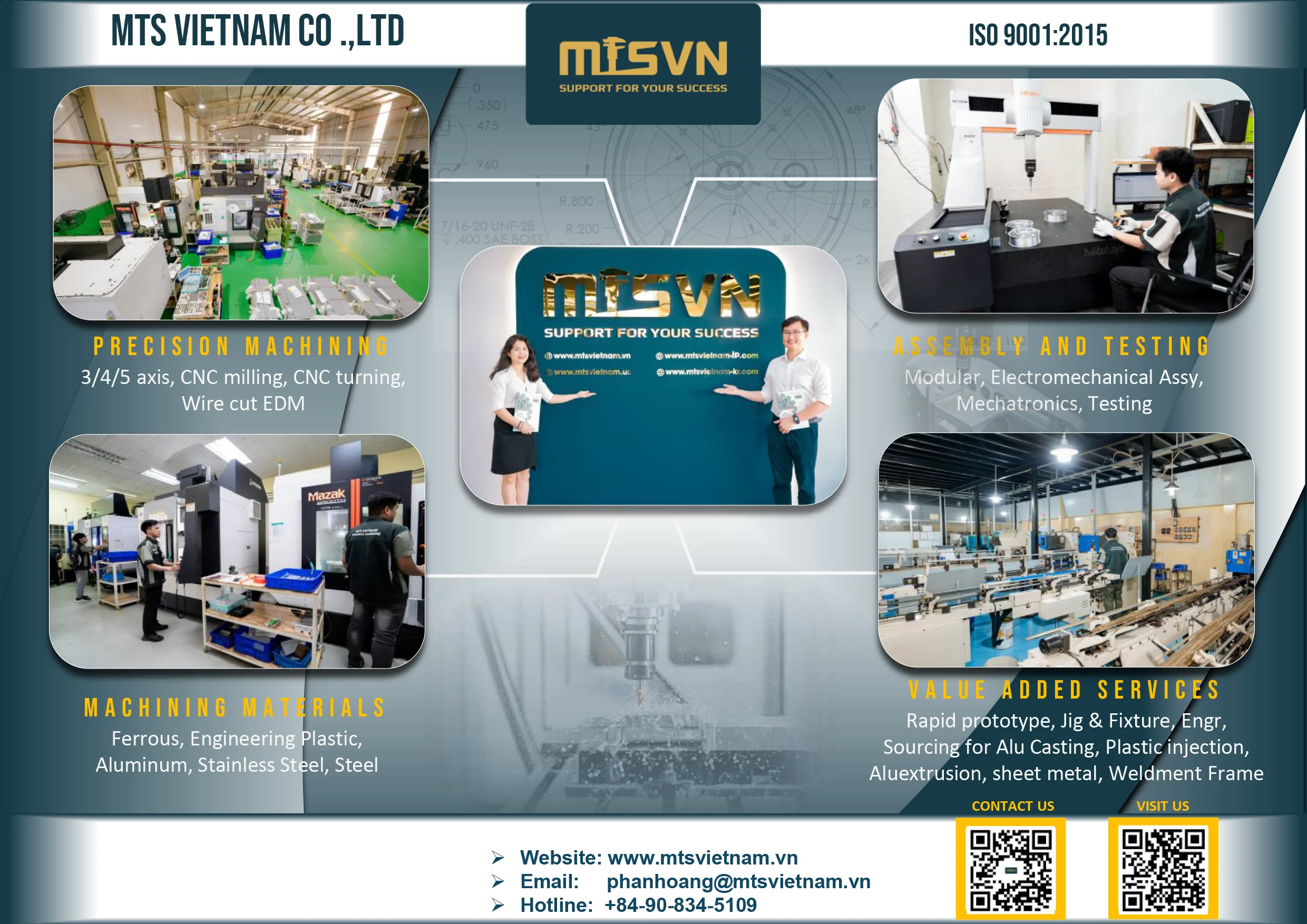
MTS Vietnam is a prominent company specializing in precision mechanical components fabrication. Established in 2017, it has quickly become a reputable name in the Vietnamese and Southeast Asian markets. The company's expertise lies in CNC milling and turning parts made from a variety of materials, including Aluminum, Steel, Stainless, POM, and other engineering plastics. MTS Vietnam is dedicated to supporting the success of its customers and strives to be a leading company in the field of precision mechanical processing both in Vietnam and internationally.
In addition to its fabrication services, MTS Vietnam offers assembly services for components and machines, as well as CNC program services. This comprehensive range of services is aimed at providing optimal solutions and benefits to its customers through the company's ecosystem and strengths. MTS Vietnam emphasizes the importance of investing in new technology and quality control equipment to ensure that it can deliver merchandise at competitive prices and within the required deadlines.
WORKSHOP: 248/10 ĐT743A Street, Binh Thung 1 Quarter, Dong Hoa Ward, Ho Chi Minh City, Vietnam
Tel/zalo/viber: 0908.345.109
Email: phanhoang@mtsvietnam.vn | info@mtsvietnam.vn
Website: www.mtsvietnam.vn (Global Market) | www.mtsvietnam-jp.com (日本)
For USA Sales, please contact MTS USA at:
Tel/zalo/viber: 978-777-1716
Email: sales@mts-usasales.com
Website: www.mtsvietnam.us (US Market)