Introduction
Computer Numerical Control (CNC) technology has revolutionized the mechanical industry, particularly in the field of precision mechanics. CNC machining allows for the production of highly accurate and complex parts, essential for applications where precision is paramount. This article explores the role of CNC parts in the mechanical industry, highlighting their significance in precision mechanics.
What is CNC Machining?
CNC machining is a manufacturing process in which pre-programmed computer software dictates the movement of factory tools and machinery. This technology can control a range of complex machinery, from grinders and lathes to mills and routers. The precision and versatility of CNC machining make it an indispensable tool in modern manufacturing.
Key Advantages of CNC Machining
- High Precision and Accuracy: CNC machines can produce parts with extremely tight tolerances, often within microns. This level of precision is crucial for industries like aerospace, medical devices, and automotive, where even minor deviations can impact performance and safety.
- Consistency and Repeatability: Once a CNC machine is programmed, it can produce identical parts consistently, batch after batch. This repeatability ensures that every part meets the same high standards, reducing variability and improving overall product quality.
- Complex Geometries: CNC machines can produce complex shapes and intricate details that would be challenging or impossible to achieve with manual machining. This capability expands the possibilities for innovative design and functionality in mechanical components.
- Efficiency and Speed: CNC machining is highly efficient, allowing for faster production times compared to traditional machining methods. Automated processes also reduce the need for manual intervention, which can speed up production cycles and reduce labor costs.
Applications of CNC Parts in Precision Mechanics
CNC parts are integral to a wide range of applications in precision mechanics. Some key sectors include:
- Aerospace: In the aerospace industry, CNC parts are used to manufacture critical components such as turbine blades, engine parts, and structural elements. The high precision of CNC machining ensures these parts meet strict safety and performance standards.
- Medical Devices: CNC machining is essential for producing medical devices and implants that require exceptional precision and biocompatibility. Parts such as surgical instruments, prosthetics, and diagnostic equipment rely on CNC technology for their intricate designs and tight tolerances.
- Automotive: The automotive industry uses CNC parts for engine components, transmission parts, and custom body parts. The ability to produce high-quality, consistent parts contributes to the reliability and efficiency of modern vehicles.
- Electronics: CNC machining is used to create precise parts for electronic devices, including housings, connectors, and heat sinks. The precision and repeatability of CNC processes are critical for the performance and durability of electronic components.
Materials Used in CNC Machining
CNC machining is versatile in terms of the materials it can handle. Common materials include:
- Metals: Aluminum, steel, titanium, and brass are frequently used in CNC machining due to their strength, durability, and machinability.
- Plastics: CNC machines can also work with various plastics, such as ABS, polycarbonate, and nylon, which are often used in electronic housings and medical devices.
- Composites: Advanced composites, including carbon fiber and fiberglass, are increasingly being machined using CNC technology for lightweight and high-strength applications.
Challenges and Considerations
While CNC machining offers numerous benefits, it also presents certain challenges:
- Initial Cost: The initial investment in CNC machinery and software can be high. However, the long-term benefits in terms of efficiency and precision often justify the cost.
- Programming and Skill Requirements: CNC machines require skilled operators and programmers to create and manage the intricate software that controls the machining process. Ongoing training and development are necessary to keep up with technological advancements.
Future Trends in CNC Machining
The future of CNC machining is set to be influenced by several emerging trends:
- Automation and Industry 4.0: The integration of CNC machines with automated systems and smart factories is increasing. This trend, part of the broader Industry 4.0 movement, aims to enhance productivity and reduce human error through advanced robotics and AI.
- Advanced Materials: The development of new materials, such as high-temperature alloys and bio-compatible polymers, will expand the applications of CNC machining.
- Hybrid Manufacturing: Combining CNC machining with additive manufacturing (3D printing) is becoming more common, allowing for the creation of parts with complex geometries that were previously unattainable.
Conclusion
CNC parts are indispensable in the mechanical industry, particularly in precision mechanics. The high precision, repeatability, and efficiency of CNC machining make it a vital technology for producing complex and high-quality components across various industries. As technology advances, CNC machining will continue to evolve, driving innovation and enhancing the capabilities of precision mechanics. By embracing these advancements, manufacturers can maintain a competitive edge and meet the increasingly demanding requirements of modern engineering applications.
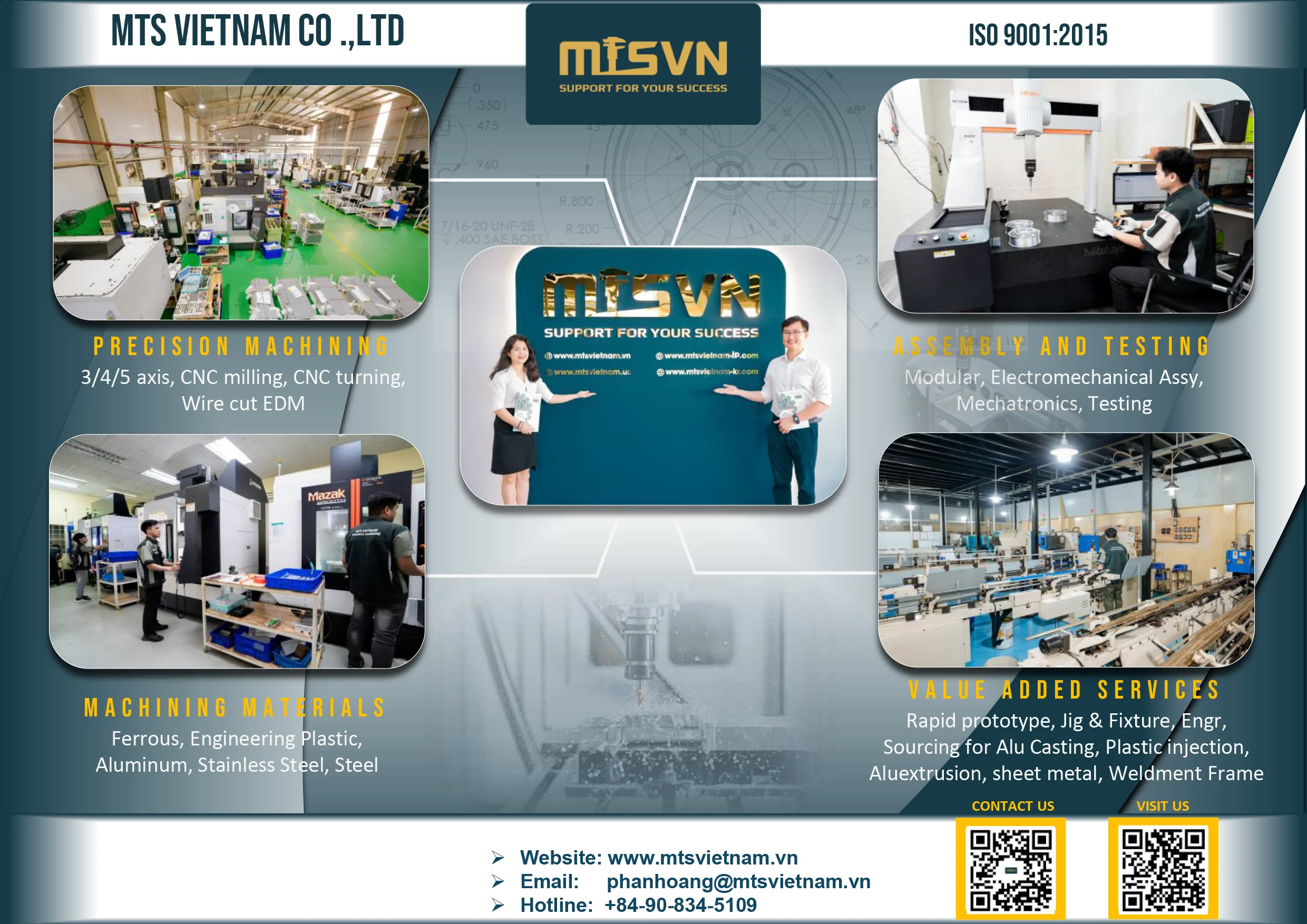
MTS Vietnam is a prominent company specializing in precision mechanical components fabrication. Established in 2017, it has quickly become a reputable name in the Vietnamese and Southeast Asian markets. The company's expertise lies in CNC milling and turning parts made from a variety of materials, including Aluminum, Steel, Stainless, POM, and other engineering plastics. MTS Vietnam is dedicated to supporting the success of its customers and strives to be a leading company in the field of precision mechanical processing both in Vietnam and internationally.
In addition to its fabrication services, MTS Vietnam offers assembly services for components and machines, as well as CNC program services. This comprehensive range of services is aimed at providing optimal solutions and benefits to its customers through the company's ecosystem and strengths. MTS Vietnam emphasizes the importance of investing in new technology and quality control equipment to ensure that it can deliver merchandise at competitive prices and within the required deadlines.
WORKSHOP: 248/10 ĐT743A Street, Binh Thung 1 Quarter, Dong Hoa Ward, Ho Chi Minh City, Vietnam
Tel/zalo/viber: 0908.345.109
Email: phanhoang@mtsvietnam.vn | info@mtsvietnam.vn
Website: www.mtsvietnam.vn (Global Market) | www.mtsvietnam-jp.com (日本)
For USA Sales, please contact MTS USA at:
Tel/zalo/viber: 978-777-1716
Email: sales@mts-usasales.com
Website: www.mtsvietnam.us (US Market)