Introduction
In the domain of precision mechanics, where meticulous accuracy and detail are paramount, CAD/CAM (Computer-Aided Design and Computer-Aided Manufacturing) software stands out as a critical technological tool. These sophisticated software solutions are essential for designing, analyzing, and manufacturing components with precision. This article delves into the significance of CAD/CAM software within the program services of precision mechanics, highlighting its functionalities, benefits, and the impact it has on the manufacturing process.
CAD/CAM Software in Precision Mechanics
CAD/CAM software facilitates the seamless transition from conceptual designs to actual production, playing a pivotal role in modern manufacturing workflows. In precision mechanics, where products must meet stringent specifications, CAD/CAM software provides the necessary tools to create detailed models and paths that guide CNC machines in the manufacturing process.
Core Functionalities of CAD/CAM Software
- Design and Modeling: CAD software allows engineers to create complex 3D models of parts or assemblies. These models are precisely scaled and can be manipulated to view potential issues before production begins.
- Simulation: Before actual machining, CAM software can simulate the machining process. This allows manufacturers to see how a machine will behave while making a part, helping to prevent costly mistakes and machine crashes.
- Toolpath Generation: CAM systems convert 3D models into CNC machine code (G-code). The software calculates the most efficient cutting paths, considering factors such as the type of material, tool geometry, and required finishes.
- Optimization: CAD/CAM software can optimize designs for manufacturability and cost-effectiveness by suggesting changes to geometry or process pathways that reduce waste or machining time.
Benefits of CAD/CAM Software in Precision Mechanics
- Increased Accuracy: CAD/CAM ensures that parts are manufactured with high precision, adhering closely to technical specifications. This is crucial in fields like aerospace, medical devices, and automotive engineering, where precision is non-negotiable.
- Enhanced Efficiency: By automating the design and manufacturing processes, CAD/CAM software significantly speeds up production and reduces the time to market for new products.
- Reduced Waste: Effective toolpath strategies and material simulations minimize unnecessary material usage and machining time, leading to cost savings and environmental benefits.
- Improved Product Quality: The ability to test and adjust digital models before physical production helps ensure high-quality outcomes, reducing the need for post-production adjustments or rework.
Challenges and Considerations
While CAD/CAM software offers numerous advantages, its implementation comes with challenges. The cost of top-tier software can be prohibitive for smaller operations, and there is a significant learning curve associated with mastering these complex tools. Additionally, ongoing updates and maintenance are required to keep the software performing optimally with the latest manufacturing technologies.
Future Outlook
The future of CAD/CAM software in precision mechanics looks towards greater integration with emerging technologies such as AI and machine learning. These advancements are expected to further enhance the capabilities of CAD/CAM systems, enabling more predictive and adaptive manufacturing processes. Integration with the Internet of Things (IoT) and smart manufacturing environments will also increase, allowing CAD/CAM systems to directly interact with production machines and adjust operations in real time for enhanced efficiency and flexibility.
Conclusion
CAD/CAM software is a foundational component of program services in precision mechanics, offering powerful tools for design, simulation, and manufacturing. As technology evolves, the role of CAD/CAM in enhancing precision, efficiency, and innovation within various industries is set to expand, affirming its status as a critical asset in the digital manufacturing landscape.
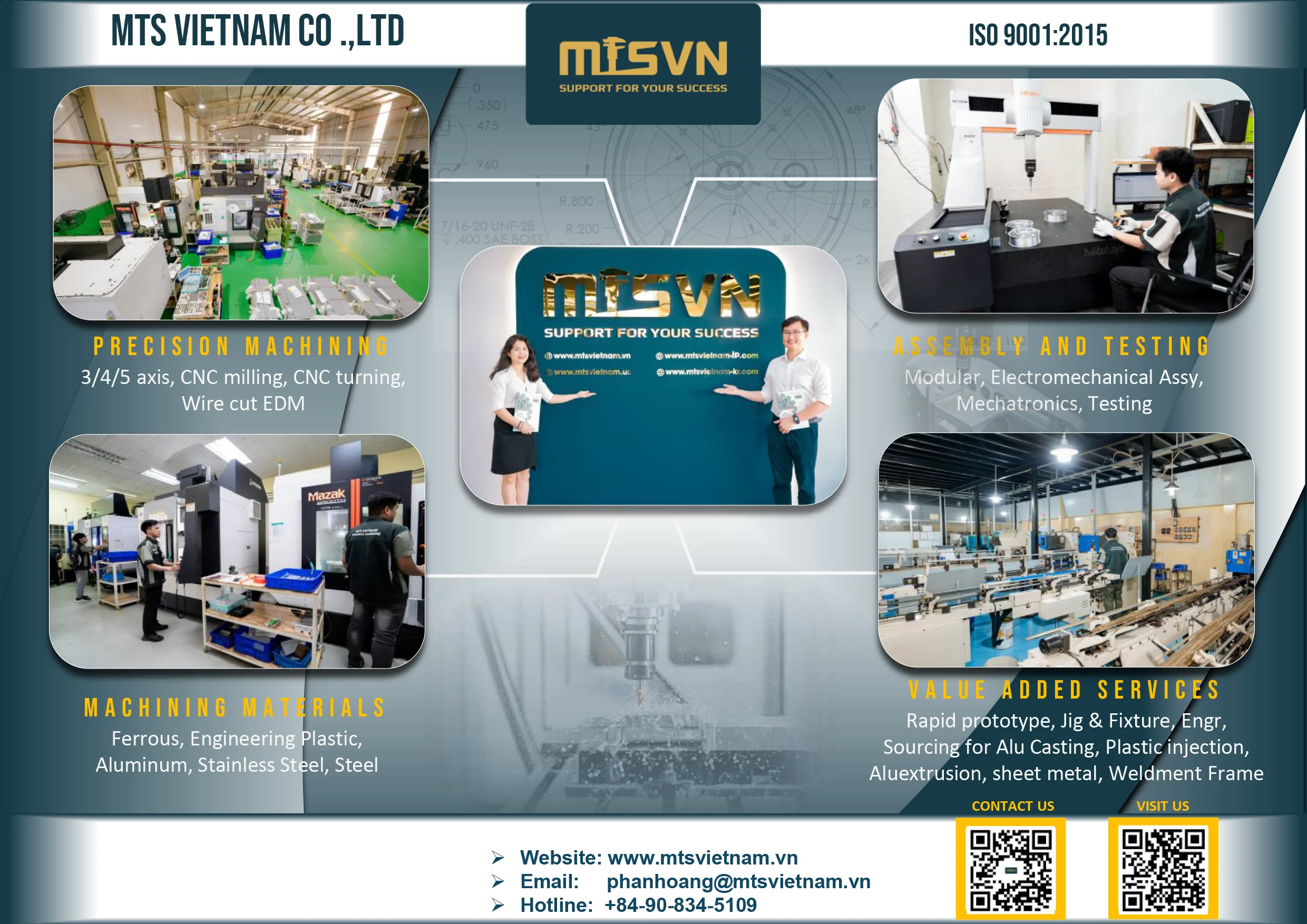
MTS Vietnam is a prominent company specializing in precision mechanical components fabrication. Established in 2017, it has quickly become a reputable name in the Vietnamese and Southeast Asian markets. The company's expertise lies in CNC milling and turning parts made from a variety of materials, including Aluminum, Steel, Stainless, POM, and other engineering plastics. MTS Vietnam is dedicated to supporting the success of its customers and strives to be a leading company in the field of precision mechanical processing both in Vietnam and internationally.
In addition to its fabrication services, MTS Vietnam offers assembly services for components and machines, as well as CNC program services. This comprehensive range of services is aimed at providing optimal solutions and benefits to its customers through the company's ecosystem and strengths. MTS Vietnam emphasizes the importance of investing in new technology and quality control equipment to ensure that it can deliver merchandise at competitive prices and within the required deadlines.
WORKSHOP: 248/10 ĐT743A Street, Binh Thung 1 Quarter, Dong Hoa Ward, Ho Chi Minh City, Vietnam
Tel/zalo/viber: 0908.345.109
Email: phanhoang@mtsvietnam.vn | info@mtsvietnam.vn
Website: www.mtsvietnam.vn (Global Market) | www.mtsvietnam-jp.com (日本)
For USA Sales, please contact MTS USA at:
Tel/zalo/viber: 978-777-1716
Email: sales@mts-usasales.com
Website: www.mtsvietnam.us (US Market)